Amarnath Yatra 2026 Is Open: Dates, RFID Registration & the Pahalgam Route, Step by Step
The 2026 yatra runs 3 July to 28 August. Here is the practical version from a Katra-based operator: how registration and the RFID card actually work, what the Compulsory Health Certificate requires, and what each day on the classic Pahalgam route looks like.
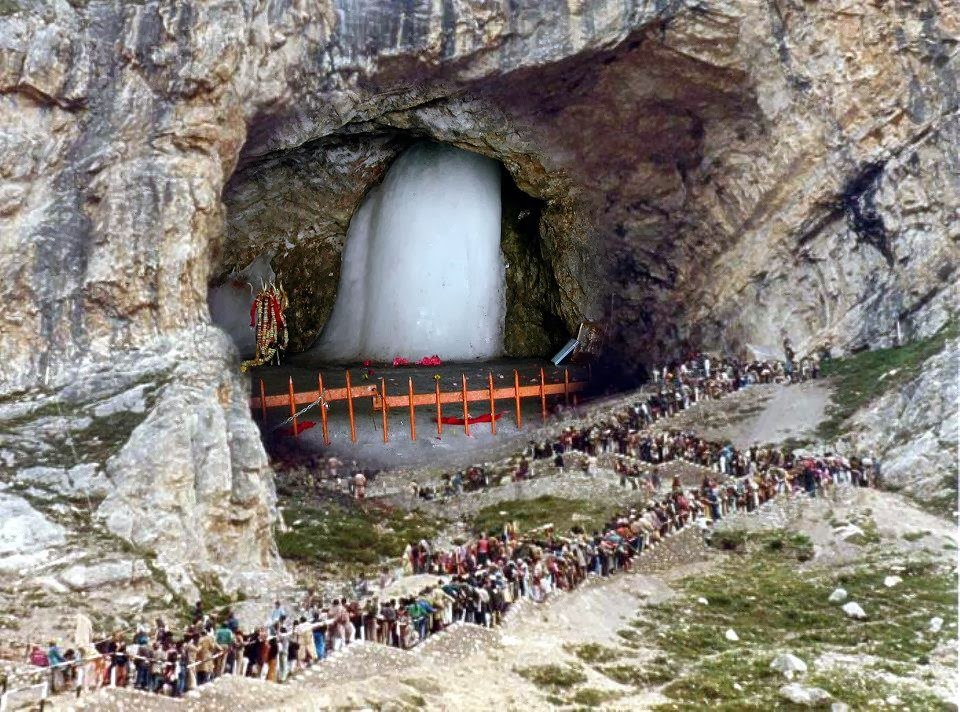
The Amarnath Yatra 2026 is underway. The Shri Amarnathji Shrine Board (SASB) window this year runs from 3 July to 28 August 2026 — a 57-day season that closes on Raksha Bandhan, when the Chhari Mubarak reaches the Holy Cave. If you are planning to go this season, the two things to get right immediately are your registration (with RFID card) and your route choice. Everything else — camps, ponies, weather buffers — follows from those two.
This is the season-specific companion to our complete Amarnath packages & helicopter booking guide. That post covers package types and heli logistics in depth; this one is about what to do now, while slots for 2026 are still open.
Amarnath Yatra 2026 dates at a glance
- Yatra opens: 3 July 2026 (both routes)
- Yatra closes: 28 August 2026, on Raksha Bandhan
- Advance registration: open since 15 April 2026 — ₹150 per pilgrim
- Where: the SASB portal (jksasb.nic.in), the SASB mobile app, or designated bank branches
August dates are gentler on crowds than the opening fortnight, but they carry more monsoon risk on the approach roads — build a buffer day into your plan either way. For a month-by-month weather picture of the region, keep our travel calendar open in another tab.
Registration, step by step (and where people get stuck)
- Get the Compulsory Health Certificate (CHC) first. Only the 2026-format CHC from a doctor authorised by your state is accepted, and it is the single most common reason applications bounce. Do this before touching the portal.
- Register on the SASB portal or app. Create an account, fill in your details, upload a photo ID (Aadhaar works), a passport-size photo and the CHC, then choose your route (Pahalgam or Baltal) and preferred date.
- Pay the ₹150 fee and download your Yatra Permit. The permit is date- and route-specific.
- Collect your RFID card before you start. The permit alone does not get you onto the track — every pilgrim must pick up an RFID card at a designated collection centre (Jammu, Srinagar and the base camps have counters) and carry it through every checkpoint.
The Shrine Board's standard eligibility rules apply — pilgrims between 13 and 70 years with a valid CHC. If you book an Amarnath Yatra package on the Pahalgam route with us, our team handles the registration paperwork and RFID slot guidance for you; you only arrange the CHC with your local doctor.
Pahalgam or Baltal — an honest comparison
Pahalgam is the traditional route: roughly 46 km from Chandanwari through Pissu Top, Sheshnag Lake, the Mahagunas Pass and Panchtarni to the Holy Cave, walked over three to five days. It is longer but more gradual, and it is the route with the classic overnight camps — sleeping at Sheshnag with the lake below you is half the pilgrimage.
Baltal is the short, steep option: about 14 km each way, done as a hard same-day or overnight push. It suits fit yatris on a tight schedule, but it is unforgiving on the knees and there is far less time to acclimatise to the altitude.
Families, first-timers and anyone who wants the yatra to feel like a journey rather than a sprint should take Pahalgam. Helicopter services operate on both axes for those who cannot trek — see the helicopter booking section of our main guide for how those slots work.
The Pahalgam route, day by day
This is the rhythm our own 5-day Pahalgam-route package (from ₹19,999, with trek-camp nights at Sheshnag and Panchtarni) follows:
Day 1 — Srinagar: arrive, complete any pending registration formalities, overnight in Srinagar.
Day 2 — Srinagar to Pahalgam: private transfer up the Lidder valley, permit and RFID checks, early night in Pahalgam.
Day 3 — Chandanwari to Sheshnag: drive to Chandanwari and start the climb over Pissu Top to the Sheshnag camp. Ponies can be arranged at Chandanwari (pony fees are extra on every operator's package — anyone telling you otherwise is hiding it in the price).
Day 4 — Sheshnag to Panchtarni: the big day over the Mahagunas Pass, the highest point of the route, descending to the Panchtarni camp.
Day 5 — Darshan and return: the final 6 km to the Holy Cave for darshan of the ice Shiva Lingam, then back down.
All meals on the trek days, a trek guide and a basic medical kit are included in our package; the camps are shared tented accommodation, which is what everyone — every operator — uses on this route.
What to pack that people forget
- Your RFID card and permit in a waterproof pouch — they are scanned at every checkpoint
- Broken-in walking shoes with grip; the Mahagunas stretch is loose scree
- A warm layer even in July — Sheshnag and Panchtarni camps sit well above 3,500 m and nights drop near freezing
- Rain shell — this is a monsoon-season trek
- Small-denomination cash; there are no card machines above Chandanwari
Our full packing list tool generates a printable checklist for the yatra.
Extending the trip
Most yatris fly in and out of Srinagar, which means Kashmir is already at your doorstep. Adding two or three days for Dal Lake, Gulmarg and the Lidder valley after the trek is the most common extension we arrange — see the Srinagar–Gulmarg–Pahalgam tour package for the classic circuit.
Plan it with a local operator
NorthYatra is a J&K Tourism-registered operator headquartered in Katra — the Amarnath and Vaishno Devi corridors are our home ground, not a product line. If you want the 2026 yatra handled end to end — registration guidance, transfers, camps and a guide — see the Amarnath Yatra package via the Pahalgam route or talk to our team; slots inside the 3 July–28 August window are finite and the good camp dates go first.
Frequently asked questions
What are the Amarnath Yatra 2026 dates?
The 2026 yatra runs from 3 July to 28 August 2026 on both the Pahalgam and Baltal routes, closing on Raksha Bandhan.
How do I register for Amarnath Yatra 2026?
Register on the SASB portal (jksasb.nic.in) or mobile app: upload a photo ID, passport-size photo and the Compulsory Health Certificate, choose your route and date, and pay the ₹150 fee. Advance registration has been open since 15 April 2026. You must then collect an RFID card at a designated centre before starting the yatra.
Is the medical certificate compulsory?
Yes. A Compulsory Health Certificate (CHC) in the current year's format, issued by an authorised doctor, is required for every pilgrim, and the Shrine Board's standard eligibility band is 13 to 70 years.
Which route is better — Pahalgam or Baltal?
Pahalgam is the traditional, more gradual route (about 46 km, walked over 3–5 days with camps at Sheshnag and Panchtarni) and suits most pilgrims. Baltal is roughly 14 km each way but steep, suited to fit yatris making a quick darshan.
Does a package include the pony and helicopter charges?
Standard trekking packages — ours included — cover camps, meals on trek, transfers and a guide; pony charges are always payable extra at Chandanwari, and helicopter seats are a separate booking through the official operators.